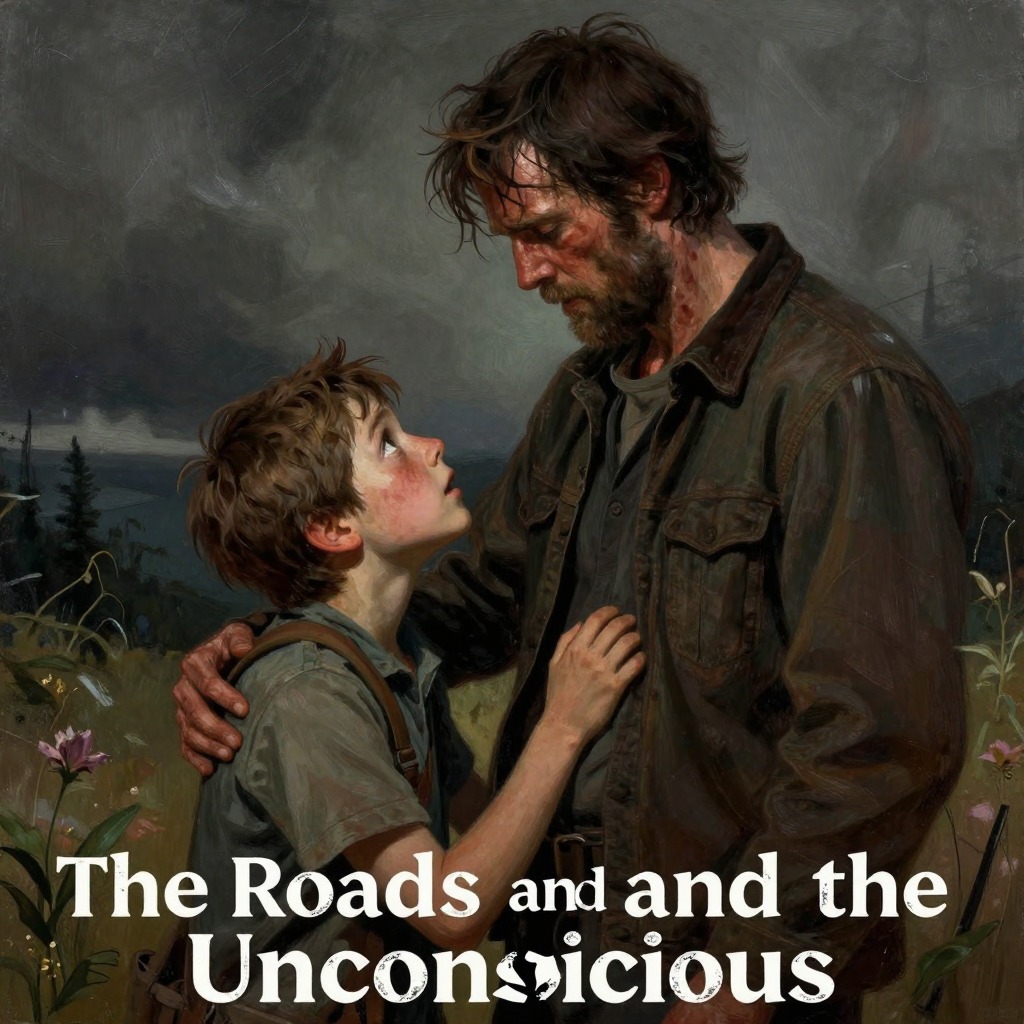
the right dreams for a man in peril were dreams of peril
In Cormac McCarthy's The Road, the man carries a private creed about the nature of dreams: "the right dreams for a man in peril were dreams of peril and all else was the call of languor and of death." This conviction, stated early in their journey south, becomes a lens through which he reads both his own sleeping mind and the boy's. It is not a casual superstition but a survival ethic, a way of distinguishing between the mind's honest warnings and its seductive escapes. In a world reduced to ash and cold, where every comfort is a potential trap, the man insists that only dreams of danger are truthful companions; anything softer is a summons toward giving up.
The Man's Dream Discipline
The man's belief is born of bitter experience and self-training. He recalls that he "slept little and he slept poorly," and that he was "learning how to wake himself from just such siren worlds." He dreams of walking in a flowering wood with the boy, the sky aching blue, but he recognizes these visions as false—"the call of languor and of death." The taste of a peach from a phantom orchard fades in his mouth, an uncanny reminder of a world that no longer exists. He deliberately cultivates a wariness toward his own subconscious, treating beautiful dreams as traps set by a dying world to lure him into surrender. This discipline extends to his waking life: he mistrusts the "siren worlds" of memory and desire, knowing that dwelling on them weakens his resolve. The right dreams, by contrast, are those that mirror the peril around him—dreams of the cave, of the creature with sightless eyes, of the earthquake that trembles the ground. These are not pleasant, but they are real, and they keep him alert.
The Boy's Nightmares and the Father's Response
The man applies his doctrine to the boy's dreams as well. When the boy wakes whimpering from a nightmare about a wind-up penguin that waddles and flaps its flippers in their old house, the man comforts him but does not dismiss the fear. The boy's dream is unsettling precisely because it is a dream of the familiar turned wrong—the penguin comes around the corner "but nobody had wound it up and it was really scary." The man's response is gentle: "Dreams can be really scary," he says, and he reassures him that it is okay now. But the boy's final observation—"The winder wasnt turning"—carries a deeper resonance. The winder not turning is an image of a world that has stopped, of mechanisms that no longer function, of a childhood that cannot be rewound. The man does not correct the boy's fear or explain it away; he lets the nightmare stand as a truthful vision of their condition. Later, when the boy wakes from another dream and refuses to tell it, the man does not press. He offers a different kind of comfort: "When your dreams are of some world that never was or of some world that never will be and you are happy again then you will have given up." This is the same principle applied to the child—a warning that happiness in dreams is a form of capitulation, and that the boy must not give up.
The Richness of Dreams and the Cost of Waking
The man's own dreams are "so rich in color," a fact he finds ominous: "How else would death call you?" The vividness of these dreams—of his wife, of a theatre with gold scrollwork and sconces, of a falcon falling—is a measure of what has been lost. Waking in the cold dawn, "it all turned to ash instantly," like ancient frescoes exposed to the day. The man's discipline is a constant battle against this richness, a refusal to be seduced by the beauty of a world that is gone. He remembers his wife in fragments—her scent is the one thing he cannot recall—and he freezes the frame of her in the theatre, then calls down "your dark and your cold and be damned." This is the cost of his creed: he must actively reject the comfort of memory to survive. The dreams of peril, by contrast, are stark and unadorned, but they do not lie. They are the mind's way of rehearsing danger, of keeping the body ready for flight.
The Final Dream and the Acceptance of Death
As the man nears death, his dream doctrine undergoes a subtle shift. In his final illness, he dreams of "softly colored worlds of human love, the songs of birds, the sun"—the very siren worlds he once mistrusted. But now he does not fight them; he lets them come. The boy, watching him, knows he is dying. The man's last words to the boy are not about dreams but about carrying the fire, about keeping going. Yet the dream doctrine has prepared him for this end. He has always known that the right dreams for a man in peril are dreams of peril, but in the end, the peril is over. The dreams of beauty return as a kind of release, a final letting go. The boy, too, has learned the lesson: he tells his father, "I dont have good dreams anyway. They're always about something bad happening," and the man acknowledges this is a sign of vigilance. But after the man's death, the boy's dreams are not described; instead, he talks to his father every day, keeping the conversation alive. The doctrine of perilous dreams has served its purpose—it kept them alive as long as possible, and now it gives way to a different kind of faith.
The expression thus functions as a moral and psychological compass for the man, a way of navigating a world where hope is dangerous and despair is fatal. It is a testament to his love for the boy, his determination to protect him from the "call of languor and of death," and his ultimate acceptance that even the most beautiful dreams cannot be trusted. In the end, the man's creed is not about pessimism but about survival—about choosing the hard truth over the easy lie, and about teaching the boy to do the same.